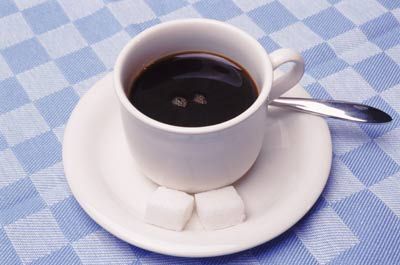
Energy drinks are supposed to do just what the name implies -- give you an extra burst of energy. As it turns out, most of that "energy" comes from two main ingredients: sugar and caffeine. A typical energy drink can contain up to 80 milligrams of caffeine (about the same amount as a cup of coffee). By comparison, a 2006 study found that the average 12-ounce soda contains 18 to 48 mg of caffeine.
Other than caffeine levels, how do energy drinks differ from sodas and sports drinks? Soft drinks are mainly water, sugar and flavoring. They don't do anything for your body; they're just supposed to taste good. Sports drinks are designed to replenish fluids lost during activity. They typically contain water, electrolytes and sugar. Energy drinks have added caffeine and other ingredients that their manufacturers say increase stamina and "boost" performance. They're designed for students, athletes and anyone else who wants an extra energy kick.
Advertisement
Energy drinks became popular in Asia long before they reached the United States. In 1962, Japanese pharmaceutical company, Taisho, released its Lipovitan D drink. It was designed to help employees work hard well into the night. Lipovitan D contains taurine, the same ingredient found in many of today's energy drinks.
The very first "energy" drink to reach the United States wasn't really an energy drink at all -- it was more of a hyped-up soft drink called Jolt Cola. The "jolt" in the cola was a lot of added sugar and caffeine. Introduced in the 1980s, Jolt Cola quickly became a staple of college campuses.
An Austrian businessman named Dietrich Mateschitz picked up on the cash potential of energy drinks while on a business trip to Asia. Along with two Thai business partners, Mateschitz started the company Red Bull GmbH, with the idea of marketing the drink to young Europeans. Many clubs on the American West Coast caught wind of the Red Bull phenomenon and began importing it to sell as a cocktail mixer.
Red Bull began distributing its drink in the United States in 1997. According to its manufacturer, revenues doubled each year, reaching more than $1 billion in 2000. Although Red Bull has consistently been the leader in the energy drink market, several other companies have launched their own energy drink lines. Many of them are endorsed by celebrities.
Here are some of the ingredients you may find in popular energy drinks and what they do in the body:
- Ephedrine - A stimulant that works on the central nervous system. It is a common ingredient in weight-loss products and decongestants, but there have been concerns about its effects on the heart.
- Taurine - A natural amino acid produced by the body that helps regulate heart beat and muscle contractions. Many health experts aren't sure what effect it has as a drink additive (and the rumor that taurine comes from bull testicles is false).
- Ginseng - A root believed by some to have several medicinal properties, including reducing stress and boosting energy levels.
- B-vitamins - A group of vitamins that can convert sugar to energy and improve muscle tone.
- Guarana seed - A stimulant that comes from a small shrub native to Venezuela and Brazil.
- Carnitine - An amino acid that plays a role in fatty acid metabolism.
- Creatine - An organic acid that helps supply energy for muscle contractions.
- Inositol - A member of the vitamin B complex (not a vitamin itself, because the human body can synthesize it) that helps relay messages within cells in the body.
- Ginkgo biloba - Made from the seeds of the ginkgo biloba tree, thought to enhance memory.
Looking at the ingredients, energy drinks appear to be part soft drink and part nutritional supplement. According to reviewers, the taste falls within the same range. People who have tried energy drinks have described the taste as ranging from "medicinal" to "molten Sweet Tart."
Although the manufacturers claim that energy drinks can improve your endurance and performance, many health experts disagree. Any boost you get from drinking them, they say, is solely from the sugar and caffeine.
Caffeine works by blocking the effects of adenosine, a brain chemical involved in sleep. When caffeine blocks adenosine, it causes neurons in the brain to fire. Thinking the body is in an emergency, the pituitary gland initiates the body's "fight or flight" response by releasing adrenaline. This hormone makes the heart beat faster and the eyes dilate. It also causes the liver to release extra sugar into the bloodstream for energy. Caffeine affects the levels of dopamine, a chemical in the brain's pleasure center. All of these physical responses make you feel as though you have more energy.
Energy drinks are generally safe, but like most things, you should drink them in moderation. Because caffeine is a stimulant -- consuming a lot of it can lead to heart palpitations, anxiety and insomnia -- it also can make you feel jittery and irritable. Over time, caffeine can become addictive. It is also a diuretic -- it causes the kidneys to remove extra fluid into the urine. That leaves less fluid in the body. so drinking an energy drink while you're exercising can be particularly dangerous. The combination of the diuretic effect and sweating can severely dehydrate you.
Many people mix energy drinks with vodka or other alcohol to make a high-energy cocktail. Since alcohol is a depressant, it has a tranquilizing effect on the body that can make you unaware of how much you're drinking. One study found that men who combined energy drinks with alcohol felt alert and sober, even though they were actually drunk. And since both alcohol and energy drinks dehydrate you, when combined they can cause your body's fluids to drop to dangerous levels. In 1991, two people in Sweden who drank alcohol with an energy drink reportedly died of dehydration, although it was never conclusively proved that the energy drink led to their deaths.
Other ingredients can also be problematic. For example, the stimulant ephedrine, an ingredient in many decongestants, can cause heart problems. In 2001, two California high school students fainted after ingesting energy drinks containing ephedrine. Because very little research has been done on the long-term health effects of consuming excess amounts of taurine and other ingredients in energy drinks, many health experts advise pregnant women and young children to avoid them.
Advertisement