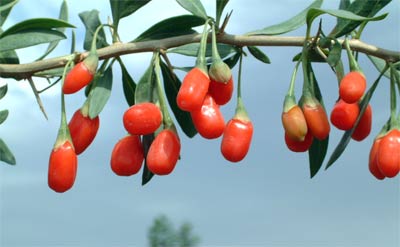
For more than 2,000 years, goji berries have been a staple remedy of traditional Chinese medicine. Known as the "longevity fruit," these small red berries also have unique immune-enhancing properties.
Your Immune System
Your body's immune system keeps you healthy by stopping foreign invaders, such as bacteria, viruses and carcinogens, from causing damage. It can malfunction in two ways. It can allow pathogens to attack, such as a cold virus. Or, it can mistakenly assume that some part of the body is an invader, attacking it and causing auto-immune disorders, such as:
- allergies
- cancer
- multiple sclerosis
- skin rashes or blisters
- joint pain or stiffness
- thyroid malfunction that results in tiredness, weight gain, sensitivity to cold or muscle aches
- ulcerative colitis
- rheumatoid arthritis
- type 1 diabetes
- lupus
- celiac disease
Disease-Resisting Compounds in Goji Berries
Goji berries contain unique compounds known as Lycium barbarum polysaccharides, most often referred to as polysaccharides. Research has shown that these compounds enhance the body's ability to resist disease. Goji's polysaccharides have a chemical structure similar to substances found in echinacea and maitake mushrooms, herbs known for their ability to support a healthy immune system.
The berries are also a rich source of vitamin C and zinc, both of which are known to protect against disease and aid in recovery. Research at Case Western Reserve University has shown that zinc can shorten the length and severity of a cold. Zinc deficiencies are more likely to occur as we age and produce less stomach acid.
Vitamin C, an antioxidant, is needed for:
- growth and repair of all human tissues
- formation of collagen in skin, scar tissue, tendons, ligaments and blood vessels
- wound healing
- healthy cartilage, bones and teeth
Zinc, also an antioxidant, is needed for:
- regulation of appetite, taste and smell
- controlling stress
- normal growth and function
- healthy reproductive function in men and women
Auto-Immune Disorders
Immune cells are like guards that constantly police our bodies, looking for harmful intruders and attacking any they find. Problems arise when the immune cells misidentify healthy cells as invaders and attack these, essentially making the body turn on itself and triggering auto-immune disease. One in five Americans suffer from an auto-immune disease. Three out of four are women.
Goji berries help the immune system to distinguish more effectively between friend and foe. The fruit's polysaccharides provide cells with special sugars that support healthy immunity and enable cells to communicate more effectively with each other.
Author and pharmacist Earl Mindell calls goji's polysaccharides "master molecules" because they "command and control many of the body's most important biochemical defense systems."
Friendly Intestinal Bacteria
Goji berries also support healthy immunity by promoting the growth of beneficial bacteria in our gastrointestinal system. The fruit's combination of fiber content and polysaccharides naturally supports the growth of healthy intestinal bacteria, known as probiotics.
Probiotics have numerous benefits, including:
- enhancing the function of the immune system
- protecting against unhealthy bacteria that cause disease
- aiding in the digestive process
- reducing symptoms of digestive disorders such as irritable bowel syndrome
- helping in recovery from respiratory infections
- reducing the risk of allergies, including respiratory symptoms and allergic skin reactions
Healthy Proteins
The protein in goji berries, which makes up 16 percent of the fruit, contains two key amino acids that support the immune system: l-arginine and l-glutamine. Both of these are building blocks for healthy immunity and work to reduce inflammation.
Research Findings
For some time, scientists in China have been examining how goji berries work. In one study, after 50 people ate approximately 1.5 ounces of goji berries daily for 10 days, their white blood cell counts and other markers of healthy immune function improved.
Other studies have analyzed various actions of goji berries in test-tube and animal trials, and have found that the berries:
- increased non-inflammatory immune cells that guard against bacteria and cancer
- reduced inflammation and may be helpful in treating inflammatory diseases
- inhibited symptoms of swelling and rheumatoid arthritis
- enhanced immunity
- may improve resistance to cancer cell growth
Allergies
Allergies occur as a result of some type of malfunction in the immune system, and can be triggered by many different substances in the environment, including food ingredients. In Asian medicine, they are traditionally treated with remedies designed to balance the immune system, rather than suppressing symptoms with medications.
In Asia, goji berries have traditionally been used as a therapy for allergies. Chinese scientists have observed that the fruit reduces antibodies that are generated in response to an allergen. In addition, the polysaccharides in goji are believed to enhance normal function of the immune system. The net effect is a restoration of healthy immune function.
Cancer
A healthy immune system is able to defend against the spread of mutated, cancerous cells. The immune system's natural killer cells are designed to target abnormal cells that develop into cancers. However, if the immune system is not able to do its job or attacks the body, the defense system breaks down and sets the stage for cancer growth.
Goji berries contain germanium, a mineral that is believed to have anti-cancer properties. In addition, its polysaccharides and antioxidants are believed to protect against free radicals that promote cancer and help to prevent cancer from developing.
Chinese studies show that goji berries inhibit some of the gene mutations that lead to cancer and that the fruit has anti-tumor properties. In addition, the berries may also help with the side effects of chemotherapy or radiation treatment for cancer.