by Gayle A. Alleman

Food Videos
Food Videos

Olive Oil Health Basics

A diet that is rich in olive oil has enhanced the health of people living in the Mediterranean region for thousands of years. Within the past century, however, olive oil's benefits have also been scientifically investigated, acknowledged, and proclaimed across the globe.

The Hardy Olive Tree
An olive tree can live 1,000 years or more. Even if the tree dies or is cut or damaged, sprouts from its roots can grow into full-size, fruit-bearing trees. Olive trees succeed in climates in which there are mildly cold winters (they need cooler temperatures to set the buds that later form the fruit) and long, hot summers.

During the growing season, olives need a lot of dry heat. The tough trees don't need much water and can tolerate temperatures as low as 10 degrees Fahrenheit for brief periods of time.

Many theories exist as to where olive trees originated, but one that is fairly well accepted is that they first grew in Asia Minor, the land bridge between Europe and Asia that is now home to Turkey and Syria. Evidence shows that humans in this area were using olives more than 8,000 years ago.

Historians believe olive use spread throughout the rest of the Mediterranean region about 6,000 years ago. Phoenicians carried olive trees to what is now southern Europe, as well as to Egypt and other areas along the North African coast. Like garlic, olive remnants have been found inside Egyptian tombs, signifying the important role they played in that culture.

Later, the Greeks and Romans put olives to good use. People in both of these ancient civilizations used olive oil to counteract poisons and to treat open wounds, insect bites, headaches, and stomach and digestive problems. They also applied olive oil to the body before bathing (it functioned as soap) and then again afterward to moisturize the skin and to form a barrier against dirt and the sun's rays. The Romans took olives along in their travels, planting them wherever they went and spreading their beneficial qualities to many regions.

Healing Through the Ages

The olive's medicinal properties have helped people for thousands of years, and those who reaped the benefits of the fruit didn't keep its wonderful secrets to themselves. During the past several hundred years, olive trees made their way around the world to areas in which they could be successfully cultivated, including North America, South America, New Zealand, Australia, and Japan.


As the olive migrated, folk remedies that used olive oil evolved to reflect the times and maladies of different regions. Olive oil was taken by mouth, spread on the skin, and dropped into the ears or nose. People considered it both a cure and a preventative measure for many afflictions. Here are some popular folk remedies that have been used over the years:
  • Take a spoonful or two to treat an upset stomach, difficult digestion, or constipation or to reduce the body's absorption of alcohol from alcoholic beverages.

  • Apply to skin to prevent dryness and wrinkles, to soften the skin, and to treat acne.

  • Use on the hair to make it shiny and to treat dandruff.

  • Strengthen nails by soaking them in warm olive oil.

  • Ease aching muscles by massaging them with olive oil.

  • Lower blood pressure by boiling olive tree leaves and drinking the "tea."

  • Clear nasal congestion with drops of olive oil in the nose.

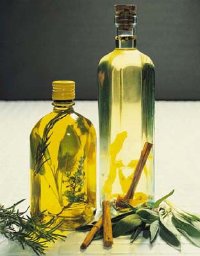
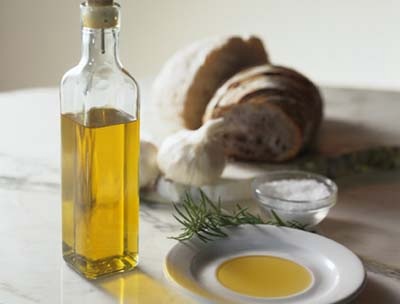
Olive oil has been used medicinally for thousands of years.
©2007 Publications International, Ltd.
Olive oil has been used medicinally
for thousands of years.

A word of caution: Using olive oil as a folk remedy may not be safe for children. In November 2005, an article in Archives of Pediatrics & Adolescent Medicine and an ensuing report by Reuters Health cautioned caregivers against giving infants and young children a dose of olive oil to treat digestive problems, fussiness, and stuffy noses.

Oil administered through the mouth or nose may be inhaled into the lungs and can cause lipoid pneumonia. You should always consult a pediatrician before trying any treatment -- whether folk remedy or over-the-counter drug -- on a child.


Chronic diseases and conditions that are caused, in part, by unhealthy foods and sedentary lifestyles plague many societies today, especially those in the Western world. The good news is olive oil may help with the worst of them, including heart disease, hypertension (high blood pressure), metabolic syndrome, inflammation, cancer, diabetes, and problems associated with obesity.

These conditions take many years to develop, but inactivity and consumption of too much solid fat (saturated fat and trans fat) greatly increase your chances of having to deal with them. However, olive oil and diets rich in monounsaturated fat may help combat the development of some chronic conditions.

Fat Facts About Olive Oil

It may seem remarkable that such a small dietary change -- switching from one type of fat to another -- can significantly impact your health, but as you will see here, the type of fat you fancy really matters. Some fats, especially olive oil, have more healthful properties than others, so to make the right choices, it's important to know the differences among the various kinds.

There are four types of dietary fats, also known as fatty acids, and each has different health effects, depending on its source and how it is produced.

Monounsaturated fat. This is the healthiest type of fat. It promotes heart health and might help prevent cancer and a host of other ailments. Monounsaturated fat helps lower "bad" LDL cholesterol levels without negatively affecting the "good" HDL cholesterol. Olive oil, peanut oil, canola oil, and avocados are rich in healthy monounsaturated fat.

Polyunsaturated fat. Polyunsaturated fat is moderately healthy. It lowers LDL cholesterol, which is good, but it also reduces levels of artery-clearing HDL cholesterol. Polyunsaturated fat is usually liquid at room temperature and is the predominant type of fatty acid in soybean oil, safflower oil, corn oil, and several other vegetable oils.

Saturated fat. This fat is unhealthy because the body turns it into artery-clogging cholesterol, which is harmful to your heart. Saturated fat is mostly found in animal products and is solid at room temperature. It is the white fat you see along the edge or marbled throughout a piece of meat and is the fat in the skin of poultry. It is also "hidden" in whole milk and foods made from whole milk, as well as in tropical oils such as coconut oil. Dietitians recommend that people eat only small amounts of saturated fat.
   

Trans fat. Trans fat is the worst type of fat; you're best off avoiding it. Most trans fat is manufactured by forcing hydrogen into liquid polyunsaturated fat in a process called hydrogenation. The process can create a solid fat product -- margarine is made this way. Hydrogenation gives foods that contain trans fats a longer shelf life and helps stabilize their flavors, but your body pays a big price.

The body recognizes trans fat as being saturated and converts it to cholesterol, which raises LDL levels and lowers HDL levels. What's worse is that unlike saturated fat, trans fat disrupts cell membranes.

Cell membranes are comprised of uniformly configured fatty acid chains that are linked together through tight chemical bonds. When trans fat works its way into the chains, it alters these bonds and creates "leaks" in the cell membrane. This action upsets the flow of nutrients and waste products into and out of the cell and may be linked to reduced immune function and possibly cancer.

Fried foods may contain a lot of trans fat, which you're better off avoiding altogether.
©2007 Publications International, Ltd.
Fried foods may contain a lot of trans fat, which you're
better off avoiding altogether -- no matter how good it tastes.

Fried foods in restaurants may contain large amounts of trans fats if they are cooked in partially hydrogenated oil. However, thanks to pressure from consumer and health groups, some restaurants are now using liquid soybean oil rather than partially hydrogenated soybean oil. This costs the restaurant a little more but is healthier for you.

Many fast-food restaurant chains display a nutrition facts brochure -- check this literature to see how much trans fat is in each food. When dining elsewhere, ask your server whether the cooks use a trans-fat-free oil. When frying foods at home, be sure to use a liquid oil, such as heart-healthy olive oil, rather than shortening, which is created by hydrogenation.

Meat and milk are also sources of trans fat, but they contain very little. These naturally occurring trans fats do not appear to have any negative health consequences.

Majority Rules

The fat we eat is made up of varying amounts of the different fats just described. When a food is predominantly comprised of one type of fat, we call it by that name. For instance, olive oil is high in monounsaturated fat. Even though it contains other types of fat, olive oil is referred to as a monounsaturated fat.

You'll see at a glance that olive oil outweighs any other fat when it comes to health-promoting monounsaturated fat content.

 Type of fat            
Monounsaturated
Polyunsaturated
Saturated       
Other elements
Olive oil  74 %
8 14 4
Canola oil  59 30 7 4
Peanut oil  46 32 17  5
Corn oil
24 59 13 4
Soybean oil 23 58 14 4
Sunflower oil 20 65 10 5
Safflower oil 14 %
75 %
6 5
Walnut oil 23 %
63 9 5
Palm kernel oil
11 %
2 81 6
Palm oil 37 %
9 50 4
Coconut oil 6 %
2 86 6
Butter 30 %
4 62 4
Shortening 30 %
37 29 4
Tallow (rendered fat
of cattle or sheep)
42 %
4 50 4
Note: Due to rounding, not all values will equal 100 percent for each type of fat
Source: U.S. Department of Agriculture, Agricultural Research Service. 2005. USDA National Nutrient Database for Standard Reference, Release 18. Nutrient Data Laboratory Home Page,
www.ars.usda.gov/ba/bhnrc/ndl


An Olive's Omegas

There are two important polyunsaturated fats that are essential for human health, but the body cannot make them. This means we must get them from the foods we eat. These two essential fatty acids are alpha-linolenic acid, an omega-3 fatty acid, and linoleic acid, an omega-6 fatty acid. The body gets both from olive oil.

Your Right to Know
By rule of the United States Food and Drug Administration (FDA), as of January 1, 2006, food manufacturers are required to list the amount of trans fat on nutrition labels. The FDA rule states that the amount of trans fat in a serving should be listed by weight (in grams) on a separate line under saturated fat.

However, according to the FDA, food manufacturers are allowed to list the amount of trans fat per serving in a food as zero grams if the actual amount is less than 0.5 gram. That is why you may see a product that has partially hydrogenated vegetable oil listed as an ingredient but has trans fat content listed as zero grams.

Omega-3 oils are the healthiest. They are part of a group of substances called prostaglandins that help keep blood cells from sticking together, increase blood flow, and reduce inflammation. This makes omega-3 oils useful in preventing cardiovascular disease as well as inflammatory conditions, such as arthritis.

Omega-6 oils are healthy, too, but they are not quite as helpful as omega-3's. Omega-6's can help form prostaglandins that are similarly beneficial to the ones produced by omega-3's, but they can also produce harmful prostaglandins. The unfavorable prostaglandins increase blood-cell stickiness and promote cardiovascular disease, and they also appear to be linked to the formation of cancer.

To encourage your body to make beneficial prostaglandins from omega-6 oils, you should decrease the amount of animal fats you eat. Too many animal fats tend to push your body into using omega-6 oils to make the unfavorable prostaglandins rather than the helpful ones.


The research is inconclusive about how much omega-6 you should eat compared to the amount of omega-3. Many researchers suggest consuming one to four times more omega-6's than omega-3's. However, the typical American eats anywhere from 11 to 30 times more omega-6's than omega-3's.

The U.S. Dietary Reference Intakes for essential fatty acids recommends the consumption of omega-6 and omega-3 fats in a ratio of 10-to-1. This means consuming ten times more omega-6's than omega-3's. Lucky for us, nature provided that exact ratio of fat in each little olive. The linoleic-to-linolenic ratio is about 10-to-1.

One of the key benefits of the fats in olive oil is that they reduce cholesterol. On the next page you'll learn why that is and how lower cholesterol helps prevent heart problems.

To learn more about the topics covered on this article, check out the links below:
This information is solely for informational purposes. IT IS NOT INTENDED TO PROVIDE MEDICAL ADVICE. Neither the Editors of Consumer Guide (R), Publications International, Ltd., the author nor publisher take responsibility for any possible consequences from any treatment, procedure, exercise, dietary modification, action or application of medication which results from reading or following the information contained in this information. The publication of this information does not constitute the practice of medicine, and this information does not replace the advice of your physician or other health care provider. Before undertaking any course of treatment, the reader must seek the advice of their physician or other health care provider.
you might also like...
FPO

Community Agriculture 101

How nice would be if in-season fruits and veggies were available to you at all times? That's the kind of benefit you enjoy when you participate in community agriculture.

FPO

How Vitamin D Works

Vitamin D is an essential dietary element to prevent calcium-deficiency diseases such as rickets, but must be taken with caution because too much Vitamin D can be toxic to children. Learn about how much Vitamin D you need and why.