France was the first country to cultivate mushrooms, in the mid-17th century. From there, the practice spread to England and made its way to the United States in the 19th century.
In 1891, New Yorker William Falconer published Mushrooms: How to Grow Them--A Practical Treatise on Mushroom Culture for Profit and Pleasure, the first book on the subject.
Advertisement
In North America alone, there are an estimated 10,000 species of mushrooms, only 250 of which are known to be edible.
A mushroom is a fungus (from the Greek word sphongos, meaning "sponge"). A fungus differs from a plant in that it has no chlorophyll, produces spores instead of seeds, and survives by feeding off other organic matter.
Mushrooms are related to yeast, mold, and mildew, which are also members of the "fungus" class. There are approximately 1.5 million species of fungi, compared with 250,000 species of flowering plants.
An expert in mushrooms and other fungi is called a mycologist--from the Greek word mykes, meaning "fungus." A mycophile is someone whose hobby is to hunt edible wild mushrooms.
Ancient Egyptians believed mushrooms were the plant of immortality. Pharaohs decreed them a royal food and forbade commoners to even touch them.
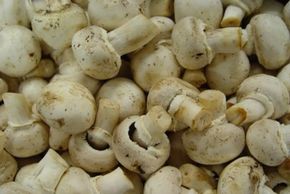
White agaricus (aka "button") mushrooms are by far the most popular, accounting for more than 90 percent of mushrooms bought in the United States each year.
Find more mushroom facts on the next page.
Advertisement