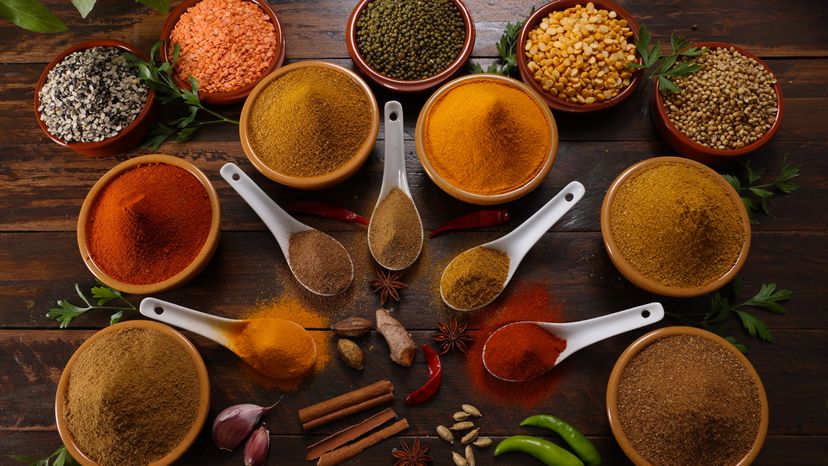
Herbs and spices should be stored in airtight containers in a cool cupboard. Most ground spices store well for about a year, twice as long as ground or dried herbs, which only have a shelf life of about six months.
Herbs
Below are some of the most commonly used herbs in cooking.
- Basil: Fresh or dried, the sweet taste of basil is essential in Italian dishes.
- Bay leaf: The dried whole leaves of this herb add tang to stews and meat dishes, but make certain that you remove the bay leaf before serving.
- Chives: Chives have a delicate flavor and are generally used as a fresh garnish.
- Dill: A member of the parsley family, dill weed is the dried, soft, feathery leaves of the dill plant. Its distinctive flavor can easily dominate any dish, so use it sparingly.
- Marjoram: With a taste close to oregano, marjoram is typically used in fish, meat, and poultry dishes and in tomato sauces.
- Mint: Available both fresh and dried, mint is used in vegetable and fruit dishes, as well as teas.
- Oregano: The strong flavor of oregano can easily overpower delicate dishes, but it is perfect in most Italian dishes.
- Parsley: When purchasing fresh parsley, look for bright green bunches with a fresh aroma. To store, wash parsley well, shaking off excess water. Wrap parsley in paper towels before placing it in a plastic bag. Refrigerate until ready to use. Parsley is usually used as a garnish.
- Rosemary: Although it does not combine well with other herbs, the distinctive flavor of rosemary makes it a good choice for meats and poultry or on any grilled food.
- Sage: Fresh sage is much stronger than dried sage, but either combines well with game, poultry, and stuffing.
- Tarragon: Tarragon is widely used on chicken, fish, and vegetables, as well as in many sauces. Dried tarragon loses much of the pungency of the fresh leaf.
- Thyme: Thyme is widely used to add flavor to vegetables, meat, poultry, fish, soups, and cream sauces. English thyme is one of the most popular varieties.
Spices
Add a little spice to your life with the following.
- Allspice: This spice gets its name because it resembles the combined flavors of cinnamon, nutmeg, and cloves.
- Capers: These are the pea-size buds of a flower from the caper bush. Found mostly in Central America and the Mediterranean, capers add pungency to sauces, dips, and relishes.
- Cayenne: This hot red pepper needs to be used sparingly to avoid overpowering a dish, but it is essential in many Latin American and Southwestern dishes.
- Chili powder: Like curry powder, chili powder is a blend of fairly hot spices and ground chilies.
- Cinnamon: While the ground bark is used mainly in desserts, whole bark sticks can be used to flavor cider and other hot drinks.
- Clove: This sweet spice is available whole and ground and is used in both baked meat dishes and desserts.
- Cumin: Ground cumin is used in many Latin American and Southwestern dishes for its smokey and hot flavor. Use it sparingly.
- Curry powder: Curry powder is formed by blending together a number of spices, including turmeric, cardamom, cumin, pepper, cloves, cinnamon, nutmeg, and sometimes ginger. Chilies give it heat, and ground dried garlic provides a depth of taste. Curry blends vary depending on their use.
- Ginger: A gnarled tan root, ginger adds a distinctive aroma and flavor to foods and is used extensively in Asian dishes.
- Nutmeg: This spice has a pungent fragrance and a warm, slightly sweet taste that is used to flavor baked goods, candy, puddings, meats, sauces, vegetables, and eggnog.
- Paprika: Ground paprika adds zip without much heat to dishes such as potato salad and seafood.
- Saffron: This fragrant spice is used most often in soups and rice dishes.
- Turmeric: Related to ginger, turmeric is an essential component of curry powder and was once known as Indian saffron. Use it sparingly -- a little goes a long way.


