Where Do Tacos Originate From? It's Complicated

By: Elena Tralwyn  | 
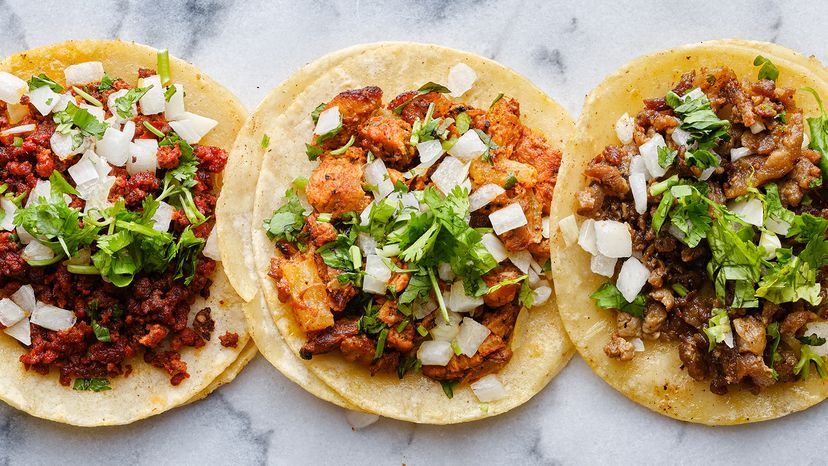
Tacos have a storied history. We're hungry just thinking about it. Joshua Resnick / Shutterstock

Where do tacos originate from? It seems simple until you look closely at the tortilla in your hand. The short answer is that tacos come from Mexico, but the longer answer runs through Indigenous people, Mexican miners, street vendors, and fast food chains that turned a local staple into a global dish.

The origins of the taco sit at the intersection of corn, meat, and movement. What started as a practical way to wrap cooked food in a tortilla became a modern taco culture that includes street tacos in Mexico City, breakfast tacos in Texas cities, fish tacos on the coast and hard shell tacos sold by Taco Bell.

Advertisement

The Taco Began With Tortilla Culture in Mexico

To understand where tacos originated, start with the tortilla. Long before Spanish conquistadors arrived, Indigenous people in Mexico and across parts of Central America were making corn dough from nixtamalized corn and pressing it into flat rounds that worked like edible plates and spoons.

A Mexican taco, at its most basic, is simply food placed on a tortilla, then folded and eaten by hand.

Advertisement

That matters because tacos did not appear out of nowhere as a single "invented tacos" moment. They grew out of Mexican cuisine built around corn tortilla cooking, especially soft corn tortillas that could hold beans, vegetables, or meat.

In that sense, the first taco may not have looked like the modern taco at all. It was likely a simple street food or home food: cooked filling, soft tortillas, and a practical way to eat.

Even today, tacos in Mexico are often served on corn tortillas with onion, cilantro, and salsa rather than cheddar cheese or sour cream.

That does not mean flour tortillas are wrong to use. They are essential in northern Mexico, where wheat became more common after the Spanish arrived and where flour tortillas became a big part of local food culture.

Advertisement

The Word 'Taco' Probably Came Later Than the Food

Here is where the story gets especially interesting. Many historians think the food existed before the word "taco" became common, which means the origins of the taco and the history of the word taco are related but not identical.

The Real Academia Española shows that "taco" is a Spanish word with several meanings, including a plug or wad, and scholars have long debated how that Spanish language term became attached to food.

Advertisement

One influential theory connects tacos to Mexican silver miners in the 18th century. In mining, a taco could describe a plug or charge used with explosives to break ore apart.

Later, dictionaries recorded "tacos de minero," or miner's tacos, which has led some writers to connect the food to Mexican miners in northern Mexico who carried simple tortillas wrapped around filling.

Still, no one can point to a single person who invented tacos. The better answer is that tacos originated in Mexico as an evolving food shaped by Indigenous cooking and then named, adapted and spread through the Spanish language over time.

The Smithsonian notes that the taco became especially visible in working-class urban life as people from different regions brought their foods into Mexico City.

Advertisement

Mexico City Turned Tacos Into Street Food Powerhouses

If early taco history starts in villages, fields and mines, the taco really took off in cities. Mexico City helped turn tacos into a flexible street food sold by street vendors and at every kind of taco stand imaginable.

As workers arrived from different regions, tacos of many styles traveled with them. That is one reason types of tacos multiplied so quickly.

Advertisement

A vendor could serve carne asada, carnitas, or other beef and pork fillings on soft tacos with soft corn tortillas. Another might specialize in tacos de guisado, while someone else focused on fish tacos or shrimp tacos near the coast.

What held it all together was the format: tortilla plus filling plus salsa. It was portable, cheap, and endlessly adaptable.

The city also became a place where migration changed the taco in dramatic ways. Lebanese immigrants brought shawarma-style spit cooking from the Middle East, which helped inspire tacos arabes and later tacos al pastor.

In that version, pork replaced lamb, the marinade became more Mexican and the result was al pastor, one of the clearest examples of how Srab tacos evolved into something distinctly local.

Today, tacos al pastor are so central to street food culture that they feel timeless, even though they are a comparatively recent development in the long history of Mexican cuisine.

That street food tradition still defines the taco. In 2024, Mexico City's Taquería El Califa de León became the first taco stand to earn a Michelin star, a reminder that a humble taco stand can produce world-class food with little more than a tortilla, meat, and technique.

Advertisement

The U.S. Helped Create the Modern Taco, but Not the Original One

Tacos crossed into the United States in the early 20th century with Mexican migrants who worked in railroads, agriculture and mining. In places like San Antonio, women called Chili Queens sold Mexican food in public plazas and helped introduce many Americans to Mexican food from across the border.

That history matters because it shows tacos were part of everyday life long before giant restaurant brands got involved.

Advertisement

But the American taco also changed fast. Tex Mex cooking in Texas, New Mexico, and other border regions adapted the taco to local tastes. Ground beef, tomato, cheddar cheese, and sour cream became common fillings and toppings. Fast food chains pushed the shift even further.

In the late 1940s, Mexican restaurateurs filed patent applications for U shape frying methods for taco shells, and patents were granted in the early 1950s; Glen Bell later helped popularize that crispy taco format through Taco Bell. The hard shell taco, with its rigid taco shells and seasoned ground beef, is real food history, but it is better understood as an American invention.

That is why the soft taco versus crispy taco debate can get confusing. In traditional Mexican restaurants, soft tortillas, especially corn tortilla rounds, remain the default. In many U.S. fast food chains, the hard shell taco became the iconic image.

Neither version erased the other. Instead, they created parallel taco traditions: authentic Mexican food on one side, mass-market Tex Mex on the other and lots of overlap in between.

You can see that evolution in the range of tacos people eat now. A street taco might hold flank steak or carne asada with onion and cilantro. A home-style taco may feature beef or pork cooked low and slow like carnitas. A Baja-style taco may use fish tacos or shrimp tacos with crema. A suburban fast-food taco may arrive in a crisp U-shaped shell with lettuce, tomato, cheddar cheese, and sour cream.

Same basic dish, very different history.

We created this article in conjunction with AI technology, then made sure it was fact-checked and edited by a HowStuffWorks editor.

Advertisement

Advertisement

Loading...