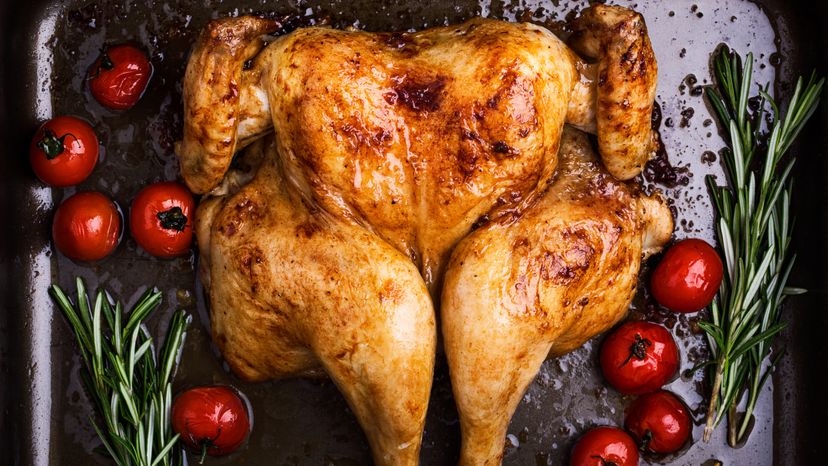
Skinning and Deboning Chicken
Using skinless chicken pieces in recipes has gained in popularity. Skinning the chicken before cooking can reduce fat and make a dish easier to eat and enjoy.
Skinless Chicken
Removing the skin also can help the chicken meat more readily absorb the flavors of marinades and cooking sauces. You can learn more about marinades in our article how to grill.
If you want to skin chicken, it's best to use cold chicken. Cold chicken is easier to skin, so plan ahead.
To skin chicken:
- Freeze the chicken pieces just until firm, but not hard. For safety reasons, make sure that you do not refreeze thawed chicken.
- Grasp the skin with a clean cotton kitchen towel to improve your grip. You can also use a clean piece of paper towel, if you want an easy-throw away method. Take the towel and pull the skin away from the meat. Be sure to discard the skin.

©2006 Publications International, Ltd.
A kitchen towel or sheet of paper towel
improves your grip. - When finished skinning the chicken, launder the towel before using it again.
Boneless, Skinless Chicken
While skinless chicken pieces have become more popular, there is another kind of chicken that has eclipsed everything else when it comes to easy, fast, low-fat cooking: boneless, skinless chicken breasts. If you want to make chicken cutlets or supremes, as they are often called, using the skinless whole chicken breast you just learned how to create, you can create your own chicken cutlets or supremes.
To cut chicken into boneless skinless chicken breast pieces:
- Place the skinless whole chicken breast, meaty side down, on a cutting board. Cut a small slit through the membrane and cartilage at the V of the neck end.

©2006 Publications International, Ltd.
Use a sharp knife or kitchen shears
to cut through the cartilage. - Grasp the breast with both hands and gently bend both sides backward to snap the breastbone.

©2006 Publications International, Ltd.
Place your thumbs on either side
of the breastbone for leverage. - With fingers, work along both side of the breastbone to loosen the triangular keel bone; pull out the bone.

©2006 Publications International, Ltd.
Be sure to remove all of the keel bone.
Check for any splinters or shards
that might have broken off. - With the tip of a sharp knife, cut along both sides of the cartilage at the end of the breastbone; remove cartilage.

©2006 Publications International, Ltd.
Make short, light chops with the tip of the
knife to separate the cartilage. - Slip the point of the knife under the long rib bone on one side of the breast. Cut and scrape the meat from the rib bones, pulling the bones away from the meat.

©2006 Publications International, Ltd.
The rib bones are connected by a membrane. - Cut the meat away from the collarbone; remove the bone. Repeat the procedure to debone the other side of the breast.

©2006 Publications International, Ltd.
Remove the collarbone from the breast. - Packaged whole, bone-in breasts already have the wishbone removed. If you cut up a whole chicken at home, you will need to remove the wishbone. Cut the meat away from the bone with the tip of the knife.

©2006 Publications International, Ltd.
Remove the wishbone if you cut
up a whole chicken. - Grasp the wishbone and pull it out of the breast.
- To remove the white tendon from each side of the breast, cut enough meat away from each tendon so you can grasp it. (Use a paper towel for a firmer grasp.) Pull out the tendon.

©2006 Publications International, Ltd.
Cut the white tendon off the boneless breast. - Turn the breast meaty side up. If desired, remove the chicken tenders from the thickest edge of each breast half and reserve for another use, such as a fast sweet and sour chicken or stir-fried chicken and vegetables. Trim any loosened connective tissue that remains.
- Cut the whole chicken breast into halves lengthwise, to make two, perfect, single-serving pieces.

©2006 Publications International, Ltd.
Cut in half to make two perfect servings.
There are many different ways to use chicken in recipes. Whether you're cutting chicken Chinese style, or cutting, skinning, and deboning a chicken for use in other recipes, you now know exactly what to do to utilize the most of the chicken for your table and not the garbage can. If you want to find out more information about preparing chicken, cooking chicken, or cooking poultry, check out our informative how-to articles. Otherwise, enjoy cooking chicken recipes with your new cutting techniques.
©Publications International, Ltd.

